

WKWF Radio first went on the air in 1944 as AM 1600. In 2021, WKWF added FM 103.3 as a simulcast signal that covers the island to MM 15. It can be heard around the world at wkwfradio.com.
The music can be described as world electronica, nu-jazz mixed with classic jazz favorites. Specialty programming includes 70's funk and soul Saturday nights and Reggae each Sunday from 12n-6pm WKWF receives many inquires as to the music it plays including requests for information about the artists. Here is a quick look at some of the core artists that make up the music on WKWF.
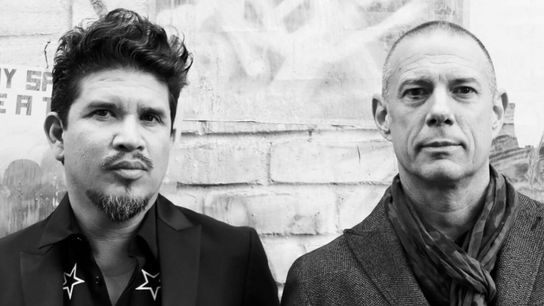
Twenty-five years into their genre-defying electronic music career, Thievery Corporation’s founding principles of D.I.Y. and inclusion have become key themes in mainstream social conversation. After a dozen highly acclaimed full-length albums, remix LPs, concert recordings, and over two decades of incendiary live performances that have thrilled audiences worldwide, Thievery Corporation’s music and message is more relevant and important now than ever.
That lack of filter enabled Garza and Hilton to mine their musical inspirations and create one of the most unique bodies of work in electronic music, respectfully incorporating tastes of international cultural styles, without ever falling into the trap of cultural appropriation. “We always wondered: with so much incredible music in the world, why would anyone limit themselves to one genre? Well, we found out – it’s far easier to stay in one lane than to genre hop!” laughs Hilton. Garza elaborates: “When we started, we were influenced by music from all over the world, flipping through bins in second hand record stores for LP’s from Brazil, India, Iran, Jamaica, jazz records…..we wanted to make music where you didn’t know whether it was recorded today or a decade ago.” Thievery Corporation’s music has always looked toward the future while paying homage to the past, starting with their groundbreaking debut LP, 1996’s “Sounds From The Thievery Hi-Fi,” which both introduced the world to Garza and Hilton as producers and set their course as pioneers of song-based electronic music with wildly diverse vocalists.
The band’s legendary D.C. headquarters, the Eighteenth Street Lounge, became an epicenter for a diverse group of people and staff from all over the world, which in turn had a profound influence on their musical output. “D.C. was very cosmopolitan, lots of places to see international live music and jazz,” says Garza. “We’d run into people from all over the world and invite them to play with us – so Thievery became an extension of that, both on our records and in our live performances.” Indeed, Hilton and Garza’s “Outernational” approach created a world reflected by the artist’s ideals of diversity and acceptance. “25 years after we started, it seems like the world is catching up,” Garza opines. “Social consciousness is more mainstream, awareness of the importance of inclusivity…it’s so encouraging to see so many people working towards these goals in America.” Hilton agrees. “Thievery is a reflection of who we are, it evolved from our musical tastes. Artists who were for the people, like The Clash, Fela Kuti, Manu Chao were so important to us, and engaging in social ideas has always been a part of what we’ve tried to do.” People don’t refer to Thievery Corporation as “World Music,” but it’s safe to say that their music and ethos is global in its scope and ahead of its time at every turn.
In a live setting, Thievery Corporation avoids any electronic dance music tropes. Yes, you’ll dance, sweat and put your hands in the air….but their concerts are true performances, with a killer band of players and an array of vocalists from diverse global cultures. No two shows feel the same. “Our shows are VERY live, lots of energy, the com-bination of multiple instruments and singers that take you on a musical journey,” says Garza. “We have a sitar player, songs are in different languages – it’s a multicultural experience, people connect to the band and to each other, it’s beautiful.” With a world cautiously beginning to emerge from isolation and towards communal events, Garza is eager to return Thievery Corporation to live performance. “I feel like people have been waiting to celebrate together after being forced apart for too long. We’re all craving that.”
Eric Hilton’s presence at Thievery gigs, however, has become an increasingly rare event. “I never really embraced touring; some of the world tours were interesting, seeing new places and cultures,” he says. “For me, touring was tourism. The creative process of making music is more my thing.” And Thievery Corporation have brought the sounds of the world to listeners throughout each of their albums. “There are so many highlights for me. 2014’s Saudade is my favorite record that we’ve done, a real creative stretch for us. Quiet music is hard to make! Symphonik also. To hear our music done with an orchestra was incredible.” Hilton concedes that over time live performance influenced the studio records. “After Cosmic Game (2011), we orchestrated jam sessions and built the records from those. For Temple of I and I (2014), we went to Jamaica to jam and record, which gave that record a different feel and authenticity.”
Looking back over their career, Rob Garza and Eric Hilton acknowledge that what drives each of them may be different, but the mashup of personalities, sounds, cultures and experiences birthed something wholly unique. “We love all kinds of music, which is why Thievery Corporation sounds the way it does,” the founding partners agree. “We couldn’t possibly incorporate all our tastes into the music, but we do it more than most.” By not following trends or the whims of major labels, and embracing the cultural diversities that make the world such a wondrous place, Thievery Corporation has created a legacy that runs deep and continues to expand.
“Over 25 years, we’ve left nothing undone. We far exceeded what we thought we would do,” Hilton and Garza agree. And Thievery Corporation’s music will continue on to reverberate and influence the next generation of listeners with an ear toward a global musical experience.
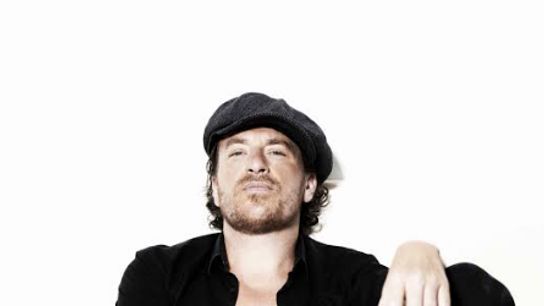
Parov Stelar, born Marcus Füreder on November 27, 1974, in Linz, Austria, is a pioneering figure in the electro-swing genre. His musical journey began in the late 1990s when he started as a DJ, performing in clubs and gradually gaining recognition in the electronic music scene. In 2004, Füreder adopted the stage name Parov Stelar and released his first EP, "KissKiss," under his own label, Etage Noir Recordings. This marked the beginning of his distinctive fusion of jazz, swing, and electronic music, which quickly set him apart from his contemporaries.
Stelar's breakthrough came with the release of his 2007 album "Shine," which included the hit track "Libella Swing." His innovative blend of vintage jazz samples with modern beats garnered widespread acclaim and a growing international fanbase. Subsequent albums like "Coco" (2009) and "The Princess" (2012) solidified his status as a leading artist in the electro-swing movement. Parov Stelar's music, characterized by its infectious rhythms and nostalgic charm, has been featured in numerous commercials, films, and TV shows, further amplifying his global reach.
Beyond his studio success, Parov Stelar is renowned for his dynamic live performances. Accompanied by the Parov Stelar Band, he brings his recordings to life with a full ensemble, including brass, strings, and vocals. This live element adds a rich, organic layer to his electronic productions, creating an electrifying concert experience. Over the years, Stelar has performed at major festivals and venues worldwide, cementing his reputation as a trailblazer in modern music. His innovative approach continues to influence and inspire a new generation of artists within and beyond the electro-swing genre.
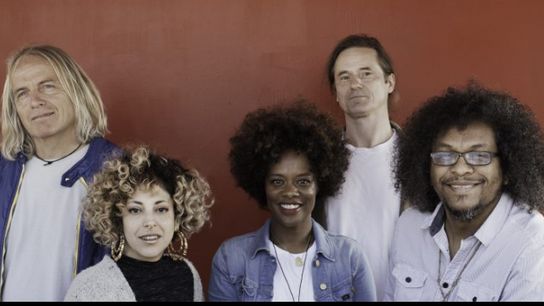
Mo’ Horizons enter a new chapter with their seventh album and remarkably, celebrate 25 years of their exultant and globally enriched, forward-thinking, electronic grooves. Featuring guest singers, Gyedu-Blay Ambolley and Noam Bar Azulay. Mang oWoman is a fiery and sample-heavy blend of future-funk, balearic, Ghanaian highlife, Brazilian drum n bass and lo-fi hip hop and set to be released on their longstanding label Agogo Records, on 6th October.
Spanning over three decades DJ and production duo Mo’ Horizons, led by Mark Wetzler & Ralf Droesemeyer, is a relentless force on the global groove scene and this incredible achievement, 25 years after their furtive production steps, is testament to remaining on-point, undeterred by scenes and artists, coming and going.
Ever-present in the contemporary jazz infected club culture of the early 2000’s, alongside contemporaries like Gilles Peterson, Jazzanova, United Future Organisation, Kruder & Dorfmeister, Fila Brazillia and Dining Rooms, it was a live show of acid jazz pioneers Galliano, in Hannover in 1995, that would act as a turning point for the duo. And having always immersed themselves in the ‘digging’, it was to labels and compilations from the likes of Something Else, Acid Jazz and then Soul Jazz, Ninja Tune and Freestyle Records that would feed their insatiable appetite for new realms of music from all ends of the Afro-Latin-Brazil-Funk and drum n bass spectrums.
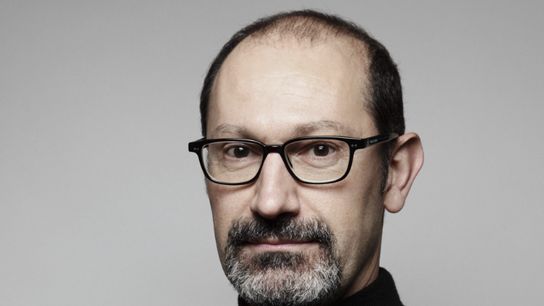
S-Tone Inc. has been for over twenty years the primary music project of Stefano Tirone, a musician from Milan (pupil of Sonny Taylor and Antonio Zambrini), whose first music experiences date back to the early 80’s, during the new wave era, with tracks included into “Gathered” and “Body Section”, two compilations released by the magazine Rockerilla).
The influence of the British acid jazz scene of the early 90’s and his deep love for the 70’s soul and jazz music are the foundations of the S-Tone Inc. project, kickstarted in 1992 by the track “Get Freaky Now”, which received great appreciation in the UK and represents one of the earliest examples of “made in Italy” acid jazz music.
His debut album “Love Unlimited” was released in 1996 on Milano 2000 and contained the track “Ainda Sonhar”, a composition that stands as one of the forerunners of the nu bossa genre and got included into tons of compilations all over the world. In 1997 he releases under the name Cosmorama a monothematic drum&bass project entitled “Space Odyssey”.
Mainly through the third album under the name S-Tone Inc., released in 2002 on Schema and entitled “Sobrenatural”, he refined his style, made of Brazilian, soul and jazz influences, without forgetting the experiences that he made with various Italian and British djs in the house music scene. S-Tone Inc had released his works with Italian and British labels, such as Schema, Irma, Acid Jazz, Centrestage.
In 2004 he produced Toco, a Brazilian artist, with the aim to revive the bossa nova tradition of the 60’s with an updated taste.
Both “Sobrenatural” and “Instalação Do Samba” by Toco were released in France on the label Bonsaï Music.
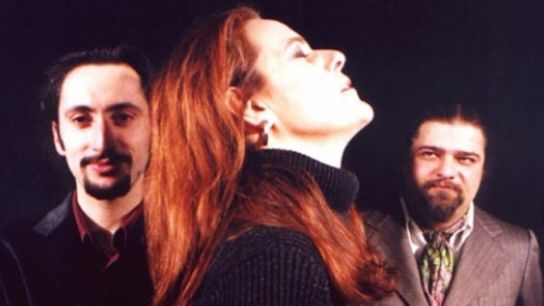
A project by Davide Penta and Pippo Lombardo – respectively basso and piano player of the group -, Balanço is the new proposal signed Fez.
Under the artistic production fo Nicola Conte, the band is running through a music route along which you may find bossa and jazz, soundtracks and songs, and even a fusion between drum n’ bass and easy listening such as the tune “Acquadream”, from the debut album “Bossa & Balanço”. The album was released in 1997 providing an interesting combination of original compositions by the two artists and rmxs of classic tracks such as “Metti una Sera a Cena” by Ennio Morricone and “Cinnamon & Clove” by Johnny Mandel. Musically the album is shaped by numerous combinations of instruments; from Harpsichords and Hammonds to Afro-Brazilian percussions and Mediterranean melodies all with the complicity of the versatile voice of Mariella Carbonara.
Schema records, with Balanço's album "More", testifies the research behind this ultimate lounge bossa collection. This second album shows the extensive growth of the project and particularly of its components, proposing . sixties sounds, mixed with foot tapping sampled beats even with a touch of Chet Baker in the flugelhorn parts courtesy of the young Italian jazz musician Fabrizio Bosso. "More" follows "Bossa & Balanço" (SC 305) that launched Balanço as one of the new fixations on the Japanese and Korean scene . Produced by Nicola Conte the new album had a positive introduction by the successful rmx by Jazzanova of "Metti una sera a cena." and will feature caliber covers of tracks such as "More" and "Cuori Solitari".
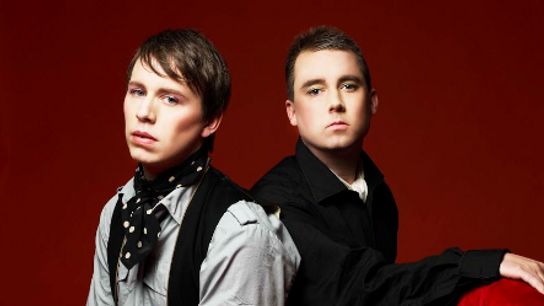
Koop was an electronic jazz duo from Sweden, consisting of Magnus Zingmark and Oscar Simonsson. Their name is a shortened version of a Swedish word meaning "cooperation". Koop won a Swedish Grammy Award in 2003 for the album "Waltz for Koop", and received a Gold certification for sales of their album, Koop Islands. Their orchestrated sound is achieved by slowly putting together thousands of small clips from records until the songs are ready. Vocals have been provided by singers such as Ane Brun, Yukimi Nagano, Hilde Louise Asbjørnsen, Rob Gallagher and Mikael Sundin. In 2007, their song "Koop Island Blues" was featured in a trailer for the videogame World in Conflict called "Destruction Blues". It was later featured as the loading screen music in game. In 2008, "Koop Island Blues" was featured in the fifth episode of the television show Breaking Bad titled "Gray Matter". In 2009, it made its return in World in Conflict: Soviet Assault trailer called "Destruction Blues II". In 2009, "Koop Island Blues" was featured in American TV show So You Think You Can Dance. The song "Strange Love" was also featured in a commercial for Coca-Cola. That same year, "Koop Island Blues" was featured as the intro music for the 2009 video game The Saboteur. Turkish television channel TV8 use "Koop Island Blues" in commercial breaks. In 2018, Oscar Simonsson formed a successor band called the Koop Oscar Orchestra. In 2018 they played a gig at the Koktebel Jazz Festival Video (en)